
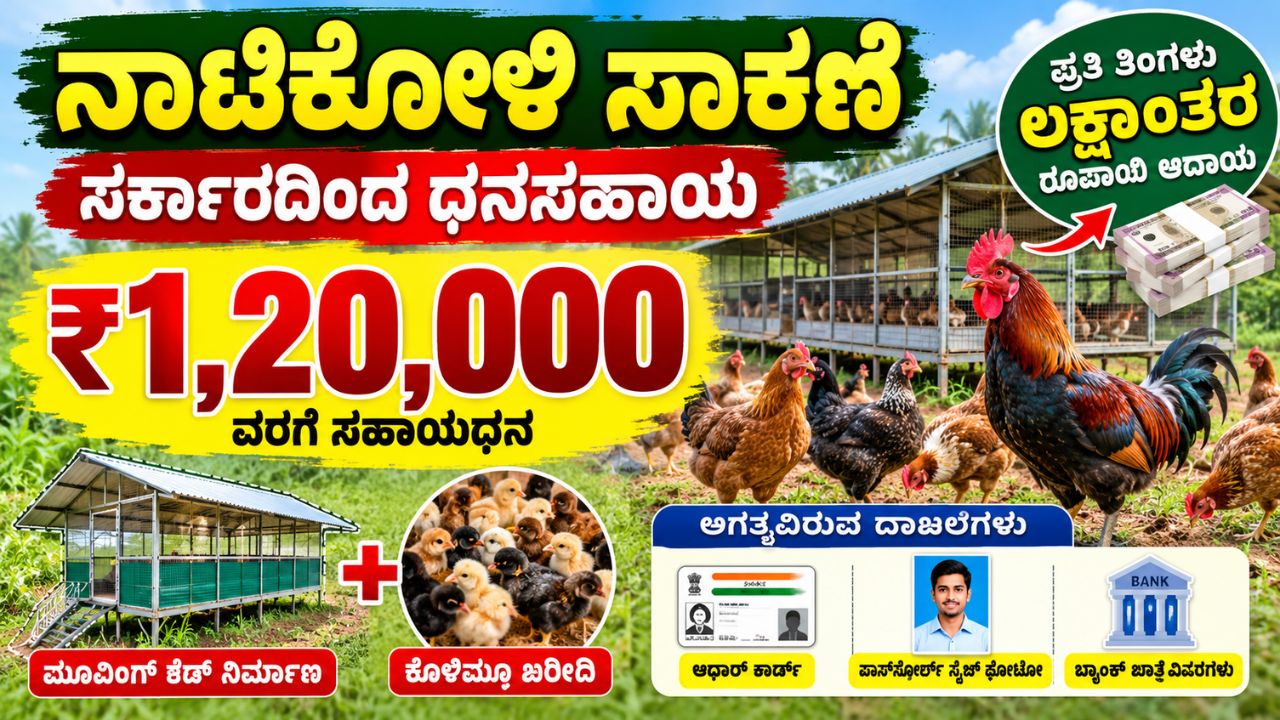
Nati Koli farming in Karnataka is a popular rural poultry farming activity that can provide additional income for farmers, rural families, and small business owners. Native chicken, commonly called Nati Koli or country chicken, is raised for meat, eggs, and the sale of chicks. With proper farm management, suitable housing, disease prevention, and a reliable market, Nati Koli farming can become a small-scale or commercial business opportunity.
In Karnataka, demand for native chicken is supported by household consumption, local meat shops, restaurants, and customers who prefer traditionally raised country chicken. Farmers can start with a small backyard poultry unit and expand as they gain experience.
What Is Nati Koli Farming?
Nati Koli farming is the rearing of native or country chickens under backyard, semi-intensive, or free-range conditions. Birds are generally allowed to move around and forage for insects, seeds, grass, and other natural food, with additional feed provided when necessary.
Unlike commercial broiler farming, which focuses on rapid growth, traditional country chicken farming often involves a longer growing period. Farmers may earn income by selling mature birds, eggs, chicks, and breeding stock.
Karnataka also has indigenous poultry genetic resources such as the Ghagus breed, which is associated with Karnataka and Andhra Pradesh. Farmers should confirm the breed and expected performance before purchasing birds.
Why Start Nati Koli Farming in Karnataka?
There are several reasons why farmers may consider starting this business.
- Demand for country chicken: Native chicken is sold through local markets, direct farm sales, and meat shops.
- Suitable for rural areas: Farmers with available land can consider backyard or semi-intensive poultry farming.
- Multiple income sources: Income can come from meat birds, eggs, chicks, and breeding birds.
- Gradual expansion: Farmers can begin with a small flock and expand according to demand and available capital.
- Use of available resources: Open space and suitable farm by-products may help supplement feeding, although balanced nutrition remains important.
The profitability of a farm depends on feed expenses, chick prices, mortality, the time required to raise birds, and the selling price in the local market.
How to Start Nati Koli Farming in Karnataka
1. Select the Right Number of Birds
Beginners should start with a manageable flock size rather than investing heavily at the beginning.
For example, a farmer can consider starting with 50 or 100 birds, depending on available space, budget, experience, and market demand.
Before purchasing chicks, identify potential buyers and estimate the cost of feed, housing, vaccination, medicines, water, and labour.
2. Choose Suitable Native Chicken Breeds
Choosing suitable birds is important for long-term farm performance.
Farmers can investigate locally available native birds and suitable improved backyard varieties. Ghagus is an indigenous breed associated with Karnataka and Andhra Pradesh. Other varieties, including Giriraja and Vanaraja, may be considered for backyard poultry systems, depending on the farmer’s production goals.
However, improved backyard varieties are not necessarily pure native Nati Koli birds. Confirm the breed, expected growth, egg production, and suitability with a veterinary expert or recognised hatchery before purchasing.
3. Prepare a Poultry Shed
A suitable poultry shed protects birds from rain, extreme heat, predators, and other environmental risks.
Important facilities include:
- Good ventilation and adequate natural light.
- Dry flooring and clean bedding.
- Protection from dogs, snakes, and other predators.
- Sufficient space for birds to move comfortably.
- Separate arrangements for young chicks and adult birds.
- Clean drinking water and accessible feeding equipment.
In Karnataka, shed design should account for local rainfall, humidity, summer temperatures, and the available land.
4. Feeding Management
Although country chickens can forage for insects, seeds, and vegetation, natural foraging alone may not provide all the nutrients needed for healthy growth and egg production.
A suitable feeding plan may include:
- Balanced poultry feed appropriate to the birds’ age.
- Grains and other suitable supplementary feed.
- Clean drinking water throughout the day.
- Appropriate protein, vitamins, and minerals.
- Additional nutrition during breeding and egg-laying periods.
Do not rely entirely on kitchen waste or leftover grains. Poor nutrition can slow growth, reduce egg production, and increase health problems.
5. Vaccination and Disease Prevention
Disease management is essential for successful Nati Koli farming.
Farmers should consult a local veterinarian regarding vaccination schedules, including protection against Newcastle disease (Ranikhet disease) and other diseases relevant to the area.
Good preventive practices include:
- Purchasing healthy chicks from a reliable source.
- Cleaning feeders and drinkers regularly.
- Keeping new birds separate before introducing them to the flock.
- Limiting unnecessary visitors to the poultry area.
- Removing sick or dead birds safely according to veterinary guidance.
- Seeking veterinary help when unusual deaths or symptoms appear.
Proper vaccination, sanitation, and biosecurity can help reduce losses.
Nati Koli Farming Investment in Karnataka
The initial investment depends on the number of birds, housing arrangements, feed requirements, and whether the farmer already owns suitable land.
The main expenses generally include:
| Expense | What It Covers |
|---|---|
| Chicks | Purchase of native or suitable backyard poultry birds |
| Poultry shed | Construction, roofing, fencing, and flooring |
| Feed | Starter, grower, and supplementary feed |
| Water and feeders | Drinking equipment and feeding containers |
| Veterinary care | Vaccines, medicines, and preventive health services |
| Labour | Daily feeding, cleaning, and bird management |
| Miscellaneous | Repairs, transportation, and unexpected expenses |
Farmers with existing land and basic infrastructure may be able to reduce their initial investment. However, a commercial operation requires adequate working capital to cover expenses until the birds or eggs are sold.
Important: Obtain current local quotations before deciding how many birds to purchase. Costs vary significantly by district, supplier, breed, and farming method.
Nati Koli Farming Profit Calculation
The profit from Nati Koli farming depends on the number of birds sold, their selling weight, local prices, feed expenses, and mortality.
The following is an illustrative calculation to explain how farmers can estimate profitability. These figures are not guaranteed market rates or a prediction of actual earnings.
Suppose a farmer starts with 100 chicks.
| Particulars | Illustrative Example |
|---|---|
| Initial chicks | 100 |
| Birds available for sale after losses | 90 |
| Average selling price per bird | ₹800 |
| Total sales revenue | ₹72,000 |
| Total rearing expenses | ₹55,000 |
| Illustrative operating surplus | ₹17,000 |
The calculation is based on the assumption that 90 birds survive and are sold at ₹800 each, with total expenses of ₹55,000.
Actual results may be substantially different. The expenses must include the relevant costs of chicks, feed, medicines, housing depreciation, labour, and other operating requirements. The selling price and production period should be verified locally.
Farmers should prepare separate estimates for meat production, egg production, and breeding operations because each has different costs and income patterns.
Marketing Opportunities for Nati Koli Farmers
Marketing is an important factor in determining whether a poultry farm succeeds.
Potential sales channels include:
- Local country chicken meat shops.
- Direct sales to households.
- Restaurants and traditional food businesses.
- Weekly agricultural and livestock markets.
- Sale of eggs and chicks to other farmers.
- Social media marketing and local WhatsApp groups.
- Direct farm sales with advance orders.
Farmers can build customer confidence by maintaining clean housing, practising responsible animal care, providing accurate information about the birds, and ensuring hygienic handling.
Before increasing production, it is advisable to establish relationships with regular buyers.
Government Support for Nati Koli Farming in Karnataka
Farmers interested in starting poultry farming should contact the Karnataka Department of Animal Husbandry and Veterinary Services or their nearest veterinary hospital for information about current schemes, training programmes, poultry units, and eligible assistance.
The availability of support can depend on the district, scheme guidelines, beneficiary category, funding, and application period.
Farmers should ask about:
- Poultry farming training.
- Availability of chicks from recognised sources.
- Backyard poultry development programmes.
- Veterinary services and vaccination support.
- Subsidies or financial assistance under currently active schemes.
- Eligibility requirements and application procedures.
Do not assume that a subsidy is available to every applicant. Confirm the current scheme, eligibility conditions, financial assistance, and application dates with the relevant government office.
For official information, visit the Karnataka Department of Animal Husbandry and Veterinary Services or consult your district veterinary office.
Common Challenges in Nati Koli Farming
Although Nati Koli farming offers potential income opportunities, farmers should prepare for the following challenges.
1. Slow growth: Traditional native birds may require a longer rearing period than commercial broilers.
2. Feed expenses: Purchased feed can account for a substantial share of operating costs.
3. Disease and mortality: Inadequate vaccination, sanitation, or biosecurity can result in significant losses.
4. Market price fluctuations: Selling prices vary with location, season, bird size, and demand.
5. Predator attacks: Free-range birds need appropriate fencing, shelter, and protection.
6. Limited market access: Farmers who depend on a single buyer may face difficulty negotiating good prices.
A practical business plan should account for these risks before the farm is established.
Tips for Successful Nati Koli Farming
- Start with a flock size that matches your budget and experience.
- Purchase healthy birds from a reliable hatchery or breeder.
- Maintain a clean and well-ventilated poultry shed.
- Follow a veterinarian-recommended vaccination programme.
- Provide balanced feed and clean drinking water.
- Maintain records of chick purchases, feed consumption, mortality, and sales.
- Check local selling prices before expanding production.
- Build relationships with customers and meat retailers.
- Maintain an emergency fund for unexpected veterinary and operating expenses.
Frequently Asked Questions About Nati Koli Farming
Is Nati Koli farming profitable in Karnataka?
Nati Koli farming can be profitable when production costs are controlled and birds can be sold at suitable prices. Profitability depends on survival rates, feed costs, the rearing period, and market access. Earnings are not guaranteed.
How many birds should a beginner start with?
A beginner may consider starting with 50 to 100 birds, depending on available land, capital, experience, and local demand. A smaller trial flock can also be useful for learning management practices.
What is the best breed for Nati Koli farming?
The best choice depends on whether the goal is native chicken meat, egg production, breeding, or backyard poultry. Farmers should distinguish pure native breeds from improved backyard varieties and confirm performance with a qualified poultry expert.
Can Nati Koli chickens be raised in a backyard?
Yes. Backyard poultry farming is possible where local regulations, available space, sanitation, predator protection, and neighbourhood conditions permit it. Birds still need adequate shelter, balanced nutrition, clean water, and veterinary care.
Are government subsidies available for Nati Koli farming in Karnataka?
Assistance may be available under specific poultry or animal husbandry programmes, but schemes and eligibility requirements can change. Contact the local veterinary department to verify current opportunities.
How can farmers sell Nati Koli chickens?
Farmers can sell through local meat shops, households, restaurants, livestock markets, and direct farm orders. Establishing buyers before expanding the flock can help reduce marketing risks.
Conclusion
Nati Koli farming in Karnataka can be an option for farmers and rural entrepreneurs seeking to diversify their income through poultry rearing. Success depends on selecting suitable birds, providing proper feed and housing, following veterinary guidance, controlling expenses, and developing a reliable market.
Starting small, maintaining accurate financial records, and confirming local demand are sensible first steps. Farmers should also consult their district veterinary office for breed recommendations, training, and information about currently available government support.
With careful planning and responsible management, Nati Koli farming can develop into a sustainable small-scale poultry business.
WordPress SEO Settings
SEO Title: Nati Koli Farming in Karnataka: Cost, Profit & Guide
Focus Keyword: Nati Koli farming in Karnataka
Meta Description: Learn about Nati Koli farming in Karnataka, including breeds, investment, feeding, vaccination, profit calculation, marketing, and government support.
Suggested URL Slug: nati-koli-farming-in-karnataka
Secondary Keywords:
- Nati Koli farming business
- Country chicken farming in Karnataka
- Nati Koli farm investment
- Country chicken farming profit
- Native chicken breeds in Karnataka
- Backyard poultry farming Karnataka
- Nati Koli farming subsidy
- Desi chicken farming guide
Suggested WordPress Tags: Nati Koli Farming, Country Chicken Farming, Poultry Farming Karnataka, Native Chicken, Backyard Poultry, Agriculture Business, Karnataka Farmers
Featured Image Alt Text: Nati Koli country chickens raised on a rural poultry farm in Karnataka
Suggested Featured Image: A realistic photograph of native country chickens roaming in a clean rural Karnataka farm with a traditional poultry shed and green surroundings.